

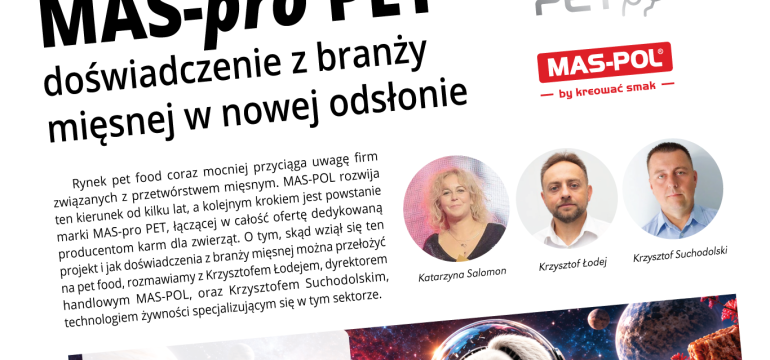
We present an interview with Sales Director Krzysztof Łodej and Technologist Krzysztof Suchodolski, discussing the growing pet food market and our offerings for this sector. Enjoy!
MAS-pro PET – experience from the meat industry, presented in a new form
Katarzyna Salomon, Rzeźnik Polski: The pet food market was already part of MAS-POL’s product range. Why, then, did you decide to establish a separate brand, MAS-pro PET?
Krzysztof Łodej, Commercial Director: The pet food sector is no longer just an adjunct to our core business. Over the years, we have supported manufacturers by providing casings, printing services, additives, and technical expertise; as the number of such projects grew, we realized the need for a more structured approach. Clients began asking not just for individual components, but for comprehensive solutions—covering everything from raw material selection and product stabilization to the choice of casings and their subsequent printing. MAS-pro PET is designed to bring clarity to this. We want manufacturers to recognize the name and immediately understand that these solutions are specifically tailored for pet food. The brand is backed by a technical team, a commercial department, a printing facility, and a packaging design studio. MAS-POL’s current offering is structured in a similar way: our technologists assist with product development and raw material selection, while the packaging studio, printing facility, and commercial team handle the subsequent stages of implementation.
Rzeźnik Polski: Not long ago, for many meat processing plants, this was a somewhat exotic activity—something far removed from their core production. Today, the situation looks a bit different.
Krzysztof Łodej: Definitely. At this point, one can no longer refer to the pet food sector as a niche. The figures alone clearly illustrate the scale. According to data from YouGov, Polish households spent approximately 4.7 billion PLN on dog and cat food in 2025. On a European level, FEDIAF estimates the market to be worth around 29.4 billion EUR annually. To me, even more interesting than the sales figures themselves is the significant shift in how pet owners view their animals. Today, a dog or cat is treated as a member of the family. Owners take a keen interest in what goes into the food bowl—they carefully examine the ingredients and observe how their pet feels after consuming a particular product. This is a trend we previously observed in the human food sector. Naturally, some meat processing plants are looking toward this category as an opportunity for growth. They already possess the necessary machinery, expertise regarding raw materials, and production experience. However, they often require a partner to help them navigate the journey from an initial concept to a stable, market-ready product. We are encountering an increasing number of representatives from these processing plants at congresses and conferences dedicated to pet food—for instance, at the recent Pet Food Congress in Kielce.
Rzeźnik Polski: MAS-POL had a strong presence at this congress.
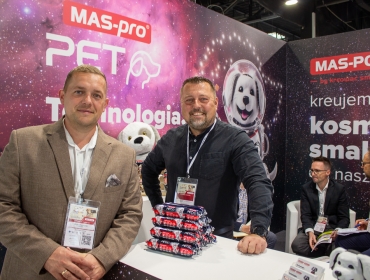
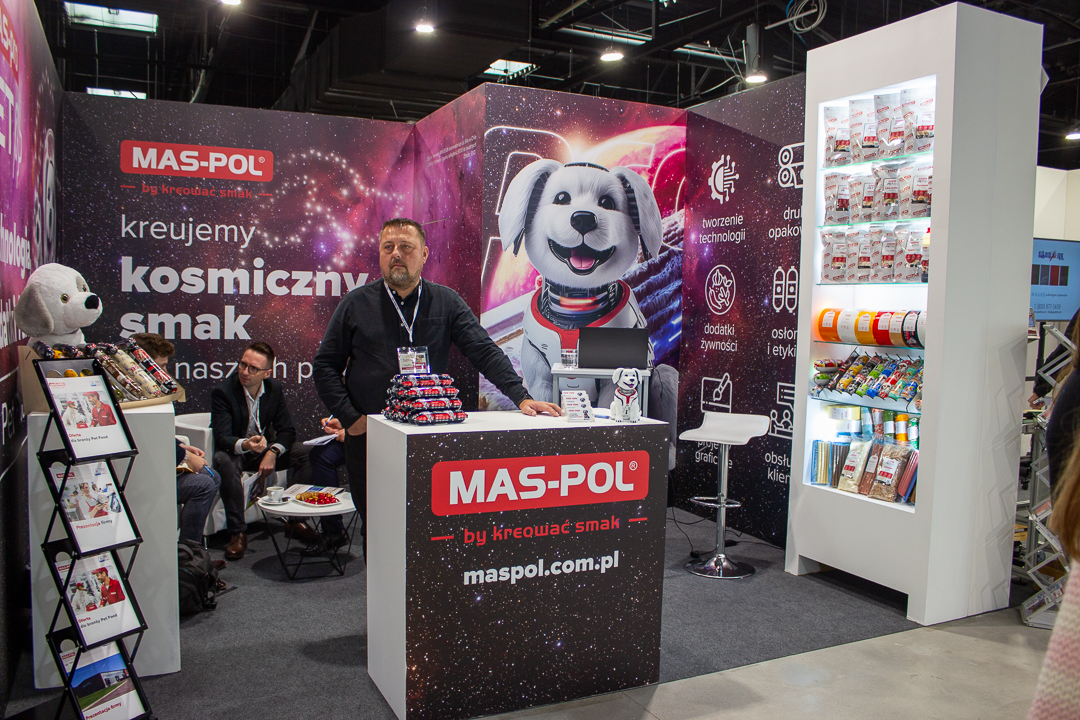
Krzysztof Łodej: Yes, we were a sponsor of the event and had our own booth. We showcased casings, printing solutions, and functional additives from the MAS-pro line, but conversations with manufacturers were just as important to us. We also prepared a presentation on the practical application of AI tools in the development and launch of a new pet food product. We wanted to demonstrate the entire process—from market analysis and formulation development to a fully realized brand, ready for market entry. We were pleased to see that the presentation sparked genuine interest among the audience. Every event of this kind is a valuable experience for us; we listen carefully to what pet food manufacturers have to say, which allows us to deepen our own knowledge and, quite simply, learn from them.
Rzeźnik Polski: Krzysztof, from a technologist’s perspective, what distinguishes working on pet food from working on a conventional meat product?
Krzysztof Suchodolski: First and foremost, you cannot approach this with the mindset: “we’ve made a similar product for humans, so let’s just do the exact same thing here.” The pet food industry has its own highly rigorous legal and quality requirements. Not every additive used in food for human consumption can automatically be applied to the production of pet food. There are specific legal regulations in place, as well as the EU Catalogue of Feed Materials. Every product offered under the MAS-pro PET brand comes with full feed-grade specifications, and our operations are conducted under an official veterinary registration number for feed businesses. This provides manufacturers with the assurance that the components we supply are fully legal, safe, and auditable. On the other hand, our experience in the meat industry is a tremendous asset. We understand how proteins, fibers, gelling agents, and specific flavorings behave. Many of the products we select for MAS-pro PET have already been thoroughly tested during implementations in traditional meat processing. We aren’t starting from scratch; rather, we carefully evaluate whether a given solution makes sense for a specific pet food recipe.
Rzeźnik Polski: What kind of solutions are offered under the MAS-pro PET brand?
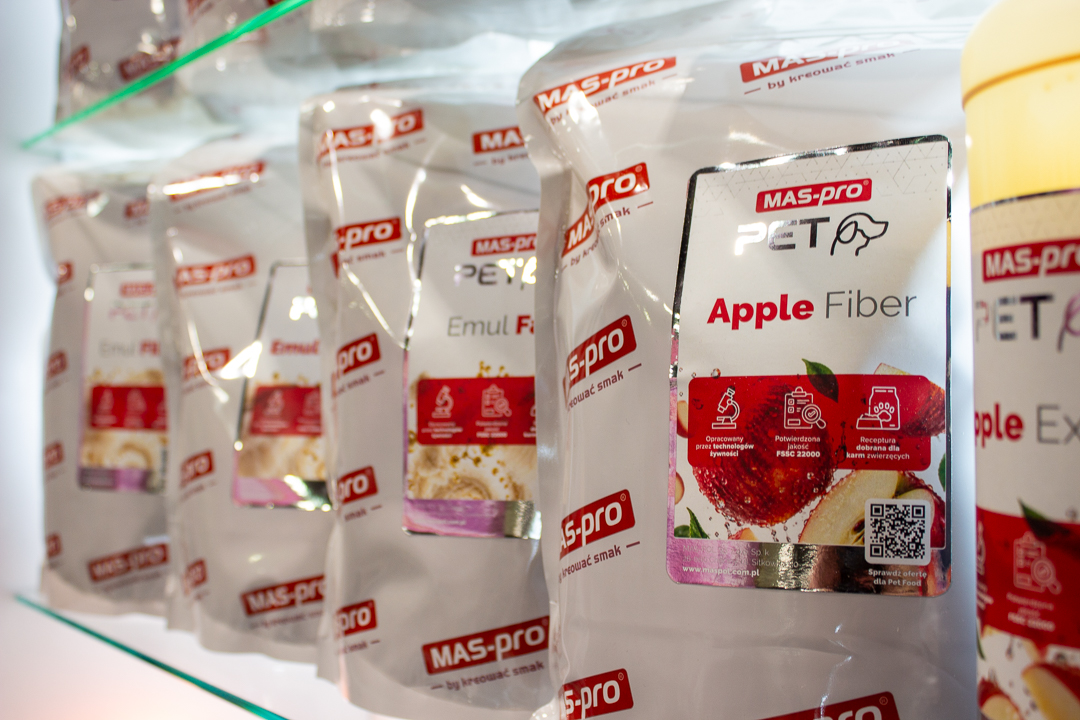
Krzysztof Suchodolski: We focus on solving specific production challenges. Our technological efforts center on issues such as effectively binding fat and water, achieving the right firmness and structure in pet food after sterilization, preventing jelly leakage, and ensuring the product maintains a stable, appetizing appearance. In food technology, it is very rare for a single ingredient to resolve a complex process; therefore, we develop specialized functional blends. Such a carefully designed composition works on multiple levels—stabilizing the fat-water emulsion, delivering the desired texture following thermal processing, and ensuring the product looks appealing within its packaging.
Rzeźnik Polski: On the company’s website, pet food offerings feature, quite prominently, packaging in the form of a barrier casing.
Krzysztof Suchodolski: In the case of a casing, the packaging is also an integral part of the technological process. It must withstand filling, clipping, thermal processing—often including sterilization—and subsequent storage. A thorough understanding of process parameters is crucial, particularly when selecting solutions designed to endure high stress while remaining stable during sterilization. A well-chosen casing helps ensure product consistency and provides protection throughout the storage period. This might seem like a minor detail—until one goes through the entire production process and sees just how significant such elements are in practice.
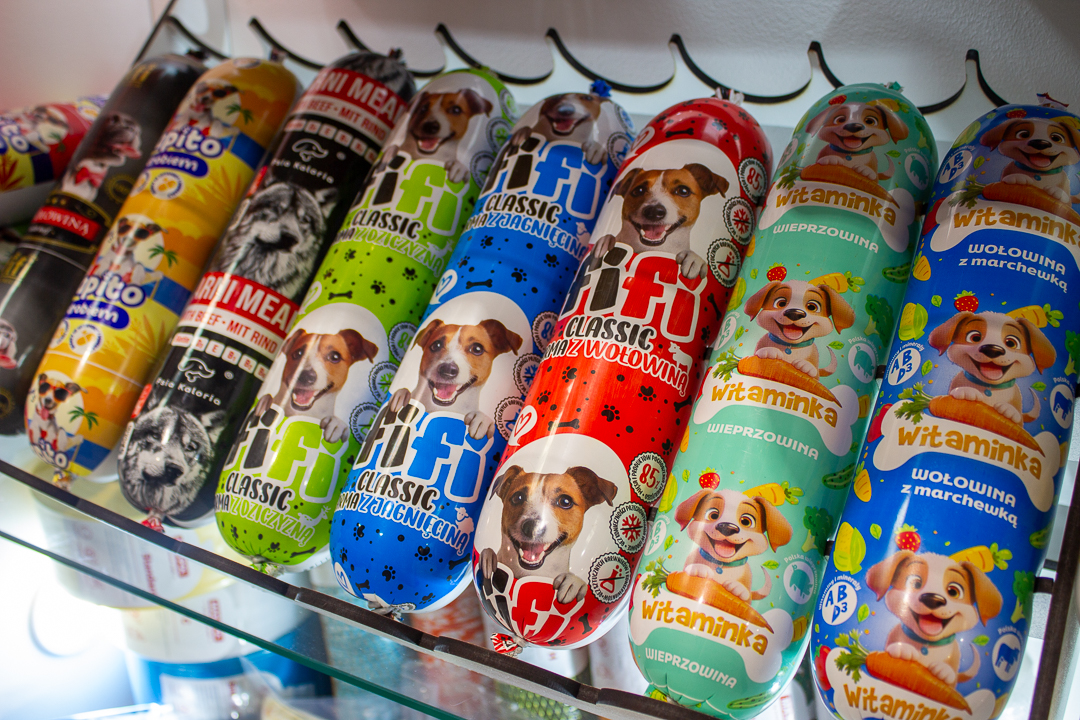
Krzysztof Łodej: Barrier casings and their printing form the cornerstone of our business. However, the MAS-pro PET brand represents much more. We work on projects involving wet pet food—packaged in casings, cans, jars, or pouches—as well as labeled products, such as shaped items, *kabanosy* (thin dry sausages), other types of sausages, snacks, and dried products. Each of these formats places unique demands on our technology department and printing facility.
Rzeźnik Polski: So, is MAS-pro PET intended to encompass more than just technological additives?
Krzysztof Łodej: Definitely. And that is one of our strong points. Clients can discuss everything with us—from the recipe, additives, and casings to the printing and the overall look of the packaging. We view the product as a whole. You might have a fantastic recipe, but if the packaging can’t withstand the production process, or if the product doesn’t look good on the shelf, the implementation is incomplete. Conversely, attractive graphics won’t save a product that is technologically unstable. These elements must work in harmony.
Rzeźnik Polski: What does the collaboration process actually look like when a plant wants to enter the pet food sector or develop a new product?
Krzysztof Suchodolski: Trust is the foundation of our entire collaboration. When a manufacturer is open about the challenges they face, we are able to work much faster and more efficiently. Our methodology is based on a strict principle: we must gain a thorough understanding of both the client’s raw materials and their processes. We begin by conducting an in-depth analysis of the raw material—examining its physicochemical properties and water activity levels. Next, we examine the technological process, including mixing parameters, thermal treatment, sterilization, or drying. Only once we have combined our knowledge of the raw material with the process parameters do we develop or select a blend tailored to that specific environment. Consequently, trials conducted at the production facility are no longer a matter of guesswork, but rather a targeted, predictable course of action.
Rzeźnik Polski: So, is MAS-pro PET, in a sense, a culmination of the experience you have gathered previously?
Krzysztof Łodej: Yes, we also view it as the beginning of the next phase. Discussions with pet food manufacturers have reinforced our conviction that the pet food industry needs suppliers who understand not just individual components, but the entire implementation process. Over the years, we have developed such a model of cooperation within the meat industry, and now we intend to foster it just as strongly here.
Krzysztof Suchodolski: MAS-pro PET is intended to be a clear signal: we have dedicated solutions for this sector, we have a team focused on it, and we want to work alongside manufacturers to create concrete products. We aim to guide the client through the entire journey—from the initial technical discussion to the finished, packaged product.
Krzysztof Łodej: In October—the time when this conversation will be published—we are planning to launch the MAS-pro PET brand at pet food trade fairs in Nadarzyn and Kielce. We invite you to visit our stands and explore what we have to offer for this industry.
Rzeźnik Polski: Apart from the MAS-pro PET brand, what else are you currently working on?
Krzysztof Łodej: For many years, we have been associated with spices—specifically their sale, packaging, and the creation of blends. Over the past year, we have expanded our spice-packaging facility with new machinery and increased the size of our team, which has significantly boosted the production capacity of this department. We are also working intensively on a new, proprietary line of premium, all-natural spice blends. We will certainly share more details about the results of this work very soon.
Rzeźnik Polski: To sum up – so thanks to the new MAS-pro PET brand, the slogan “together we create taste” is gaining a new audience?
Krzysztof Łodej: Exactly. Except that this time, the flavor ends up in a bowl rather than on a plate [laughs].
Thank you for the conversation.

Katarzyna Salomon Rzeźnik Polski Magazine
…
 2000g
 Without phosphors
 Made in Poland
 Product on sale

Krzysztof Łodej Commercial Director
…
2000g
Without phosphors
Made in Poland
Product on sale

Krzysztof Suchodolski Technologist
…
2000g
Without phosphors
Made in Poland
Product on sale